Changelings
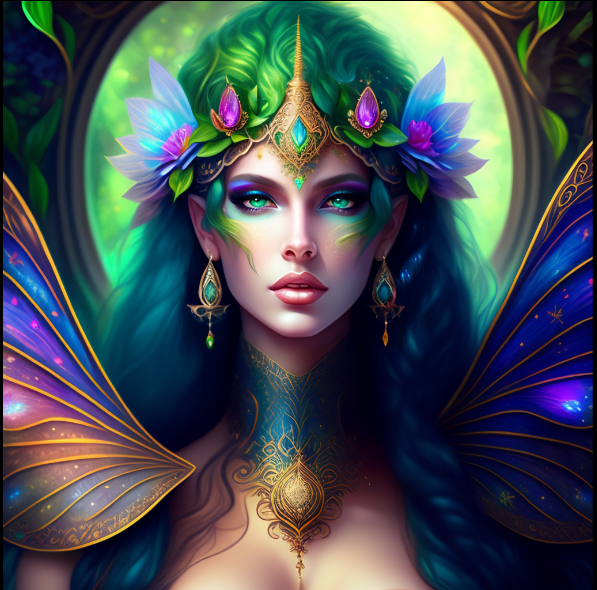
Long before Titanos claimed Lythria as his lover and sired the race of giants, he courted and bedded the moon goddess Leylalumina. From their union was born a beautiful daughter named Sylendria. She embodied creation itself: life, growth, and renewal. Where she slept, flowers blossomed. Where she danced, rivers meandered between her footsteps.
In time, Sylendria matured into a radiant goddess and, without the need of a mate, brought forth the Fae. Like their mother, the Fae were creators, but they also possessed the power to alter and mutate what had already been made. Sylendria regarded this gift as a miracle, yet she understood that such power required boundaries. To safeguard the other realms, she bound her children to the Fae Realm where they could shape and transform all they desired without fear of causing harm beyond its borders.
Then Sylendria vanished, leaving her children to their own devices. Much later, she appeared again as the wife of Supremos, and soon after Humanity was born. But during her long absence, the Fae grew increasingly dismissive of their mother’s decree that they remain within their own realm, believing she had abandoned them. They began to slip into other realms, and in Lythria, they stole life to create the goblins, a race of slaves crafted from frogs and pixie dust to serve them.
The Fae grew even more decadent from the tireless service of the goblins. When the goblins rebelled and abandoned them, the Fae lacked both the ambition to wage war against Depravos for the return of their lost servants and the discipline to create new ones. Even rearing their own offspring proved too much bother. To solve the problems as they perceived them, the Fae began placing their own young among the peoples of Lythria. To deceive mortals into raising these children, they exchanged them for Lythrian babes, altering the appearance of their own offspring so they would not be recognized as imposters. The stolen children were then taken to the Fae Realm and raised as slaves to replace the goblins.
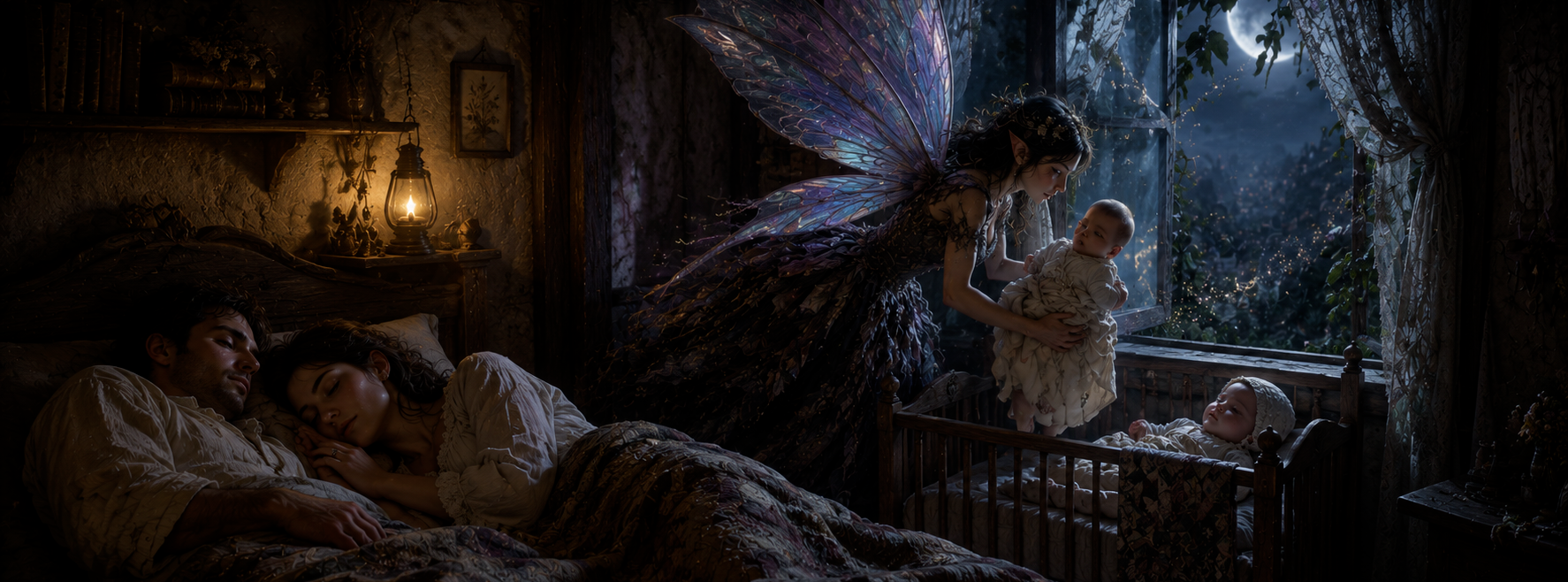
These Fae children became known as Changelings, for they were changed to resemble those they replaced. Yet when they reach puberty, their true nature begins to emerge. The soul recognizes that it is other and seeks to embrace that truth, reshaping the body into something caught between the form it has worn for more than a decade and that of a favored beast, often one with which the Changeling has long felt affinity. As this is happening, their native tongue, Faelyx, starts to form in their minds through inherent memory.
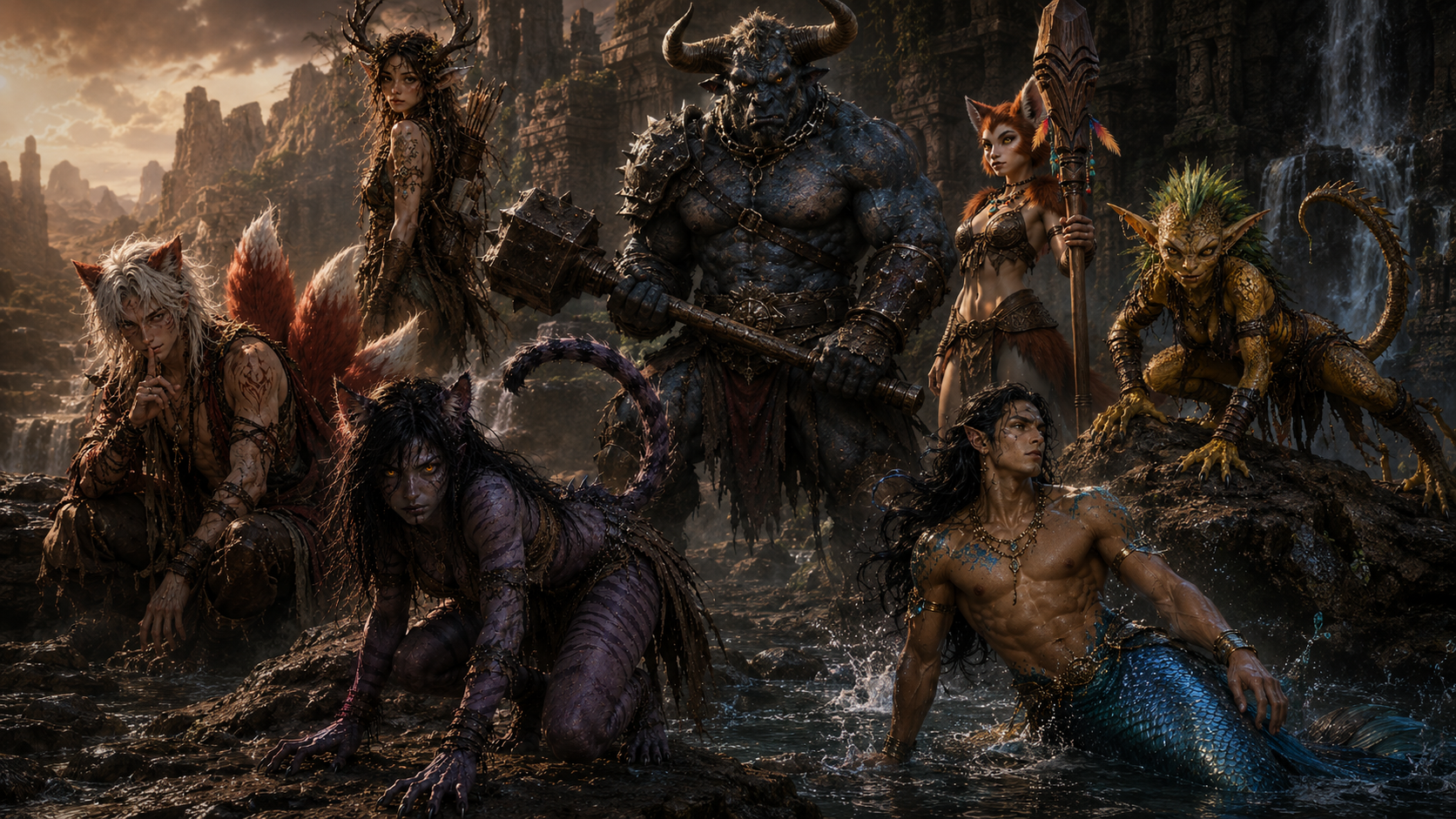
When the truth comes to light, changelings are almost always cast out, enslaved, or occasionally killed. Those who are exiled drift toward the wilderness or the margins of society where they are less likely to be hunted or controlled. Those enslaved often do the same once (and if) escape is achieved. Some gather in loose, transient communities for safety, but such groups rarely endure. If all goes well, they all return to the Fae Realm. If not, gathering in numbers attracts attention that tends to have the other races showing up with collars and chains.
Perspectives
Changelings are creatures of adaptation and contradiction, wearing whatever mask the moment demands. As such, their views of other races are never fixed, shifting with experience, necessity, and opportunity.