Orcs
Origins
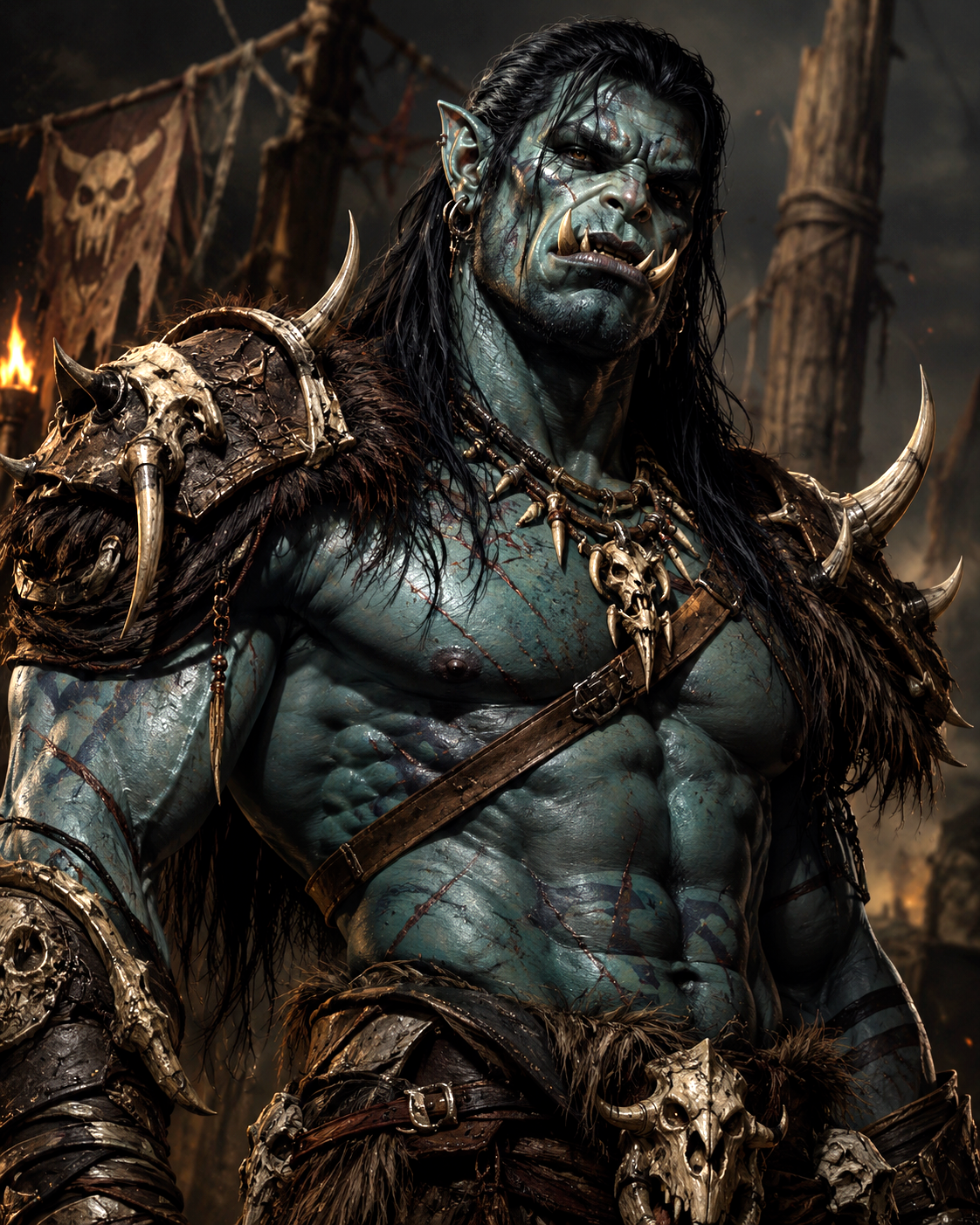
Orcs are relative newcomers to Lythria, having lived within the realm for only a few generations. Their earliest history is uncertain, as constant warfare, fractured tribes, and the frequent overthrow of Chieftains have left them with few reliable records of their arrival.
Any child born with green blood is considered a true orc, regardless of the ancestry of the other parent. So potent is this inheritance that a single orc may claim wives from among the other races and establish a fully orcish tribe within as little as two generations. Many believe this is how the first orcish tribes of Lythria arose and why new tribes continue to appear throughout the realm.
It is widely believed that every orc now living in Lythria descends from a single unknown forebear. His name, tribe, and place of origin have long since been lost, but the unusual dominance of orcish blood lends credibility to the tale. Their population has grown slowly but steadily through conquest and breeding. Some fear that, if their expansion remains unchecked, the orcs may eventually become one of the dominant peoples of Lythria.
Culture
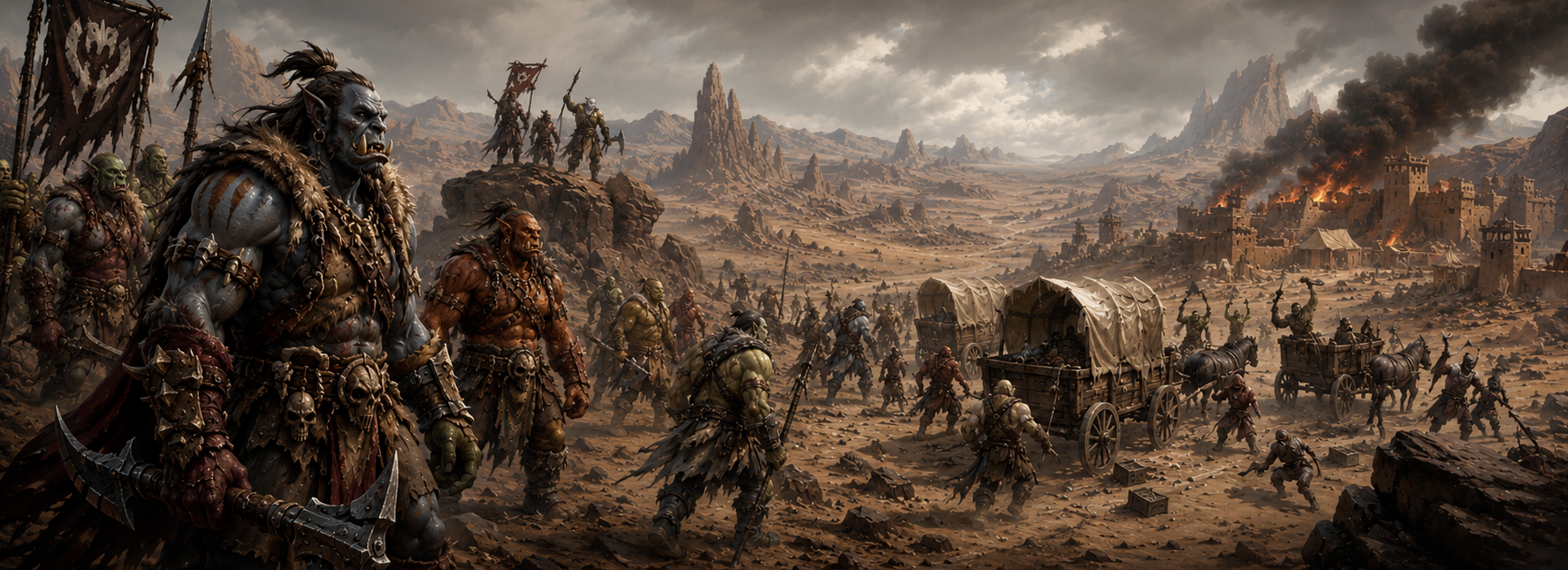
Raiding is central to orcish life. Orcs raid other peoples and one another for supplies, livestock, wives, slaves, weapons, and trophies. Theft, ambush, and open battle are accepted tests of strength, and any tribe unable to defend what it owns is believed to have forfeited it. Defeat may end in death, enslavement, submission, or absorption into the stronger tribe.
Violence and combat shape honor, authority, and social order, while endurance, conquest, loyalty, and personal prowess determine an orc’s standing. Weakness is treated as a danger that must be controlled for the good of the tribe. Most adult orcs and she-orcs aspire to possess a hut, a powerful dire wolf mount, wives, slaves, and trophies of conquest. Such holdings are proof that they can claim, command, and defend what is theirs.
Leadership follows the same law: strength proves worth. A Chieftain is obeyed only while strong enough to rule. Any orc may challenge an unworthy leader and claim command through victory, so tribes often change rulers, customs, territory, and even names.
Orcs instinctively test those they meet. A greeting between friendly orcs may involve a shove, while a greeting toward outsiders may involve a clash of steel. Anything unable to defend itself is considered unfit for freedom and may be killed, corralled, claimed as a wife, or collared for service. To an orc, this is honor, not cruelty.
Orcs share a lasting alliance with goblins. Goblins often serve among their tribes as shamans, advisers, crafters and wives, and the two peoples generally regard one another as natural allies.
Religion
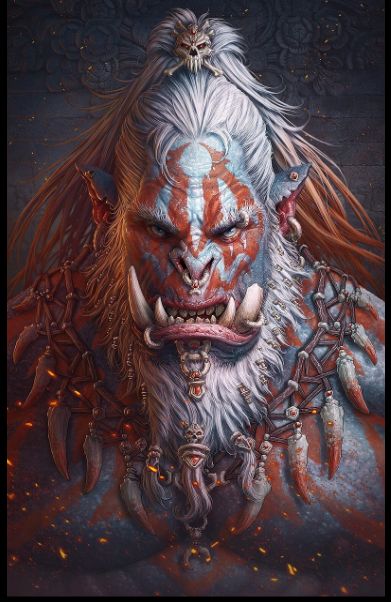
Orcish religion centers upon Gorak, Great Chieftain of the Fire Orcs. The sun is seen as Gorak’s unblinking eye, watching the deeds of warriors below. Orcs who live boldly, conquer their enemies, remain loyal to their tribe, and die with honor are believed to be reborn as Fire Orcs in his eternal warband beneath a burning sky. Each tribe interprets the details a little differently, but all hold that strength grants the right to rule, conquest proves worth, and weakness must be restrained. Orcish law is therefore seen as an expression of Gorak’s divine order.
Many orcs also carry beast totems bestowed by clan shamans. These totems are meant to lend the bearer the strength, cunning, endurance, or ferocity of the creature represented. No single priesthood or sacred law governs every tribe. Chieftains and shamans shape their own customs, but the central beliefs remain unchanged: strength is sacred, conquest is honorable, and Gorak’s enemies must be answered with blood.
Orcs and dwarves are mortal enemies, and their encounters rarely end without bloodshed. In orcish lore, Gorak claimed Lythria as one of his wives, but Titanos repeatedly takes her for himself. Lythria is not blamed, for a wife must obey the strength that commands her. The offense belongs to Titanos, who steals what is not his and challenges Gorak through deception rather than honorable combat. In retaliation for this crime, the children of Titanos, the dwarves, are made to suffer.
She-Orcs
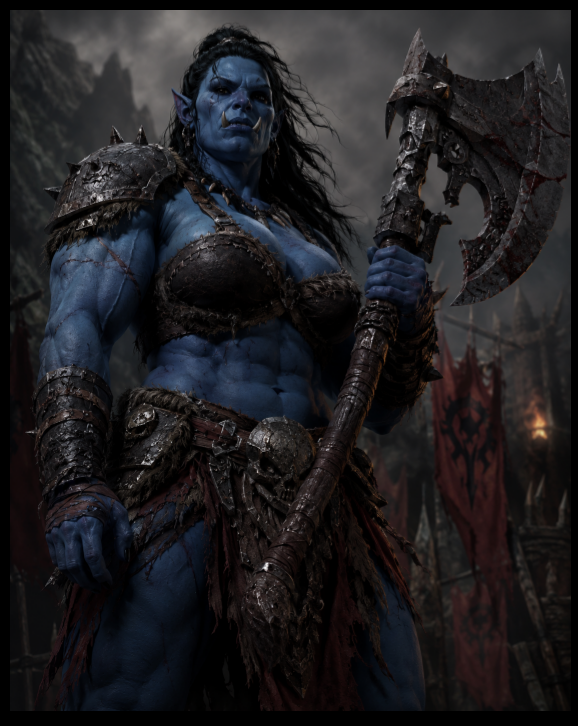
She-orcs hold the same standing as male orcs and are judged by strength, endurance, conquest, and loyalty. Among orcs, sex matters far less than the ability to fight, command, and defend what one has claimed. The gender of a wife is likewise irrelevant. Orcs give little thought to concepts such as homosexuality, and an orc or she-orc may claim as many wives of any gender they wish.
Pregnancy is treated as a practical concern rather than a defining duty. Some she-orcs carry their own offspring, often claiming male wives chosen for desirable strength, lineage, or other traits. During pregnancy and recovery, they may temporarily withdraw from battle. Others undergo bodily alterations that allow them to implant their seed into female wives, who carry the offspring instead. This allows a she-orc to continue raiding and fighting without risking herself or the orcling.
Orclings are usually raised in communal nursery tents rather than by their orcish parents. Wives of all genders feed, discipline, educate, and protect the young, allowing adult orcs to continue training, raiding and defending the tribe. Skilled nursery wives may be highly valued, though they remain servants rather than full members of orcish society.
Direct bonds between parent and child are often limited, but lineage remains important. Orclings are taught the names and deeds of their ancestors, especially those known for strength, conquest, or leadership. A prestigious bloodline may suggest greater potential, but it grants no lasting authority. Every orc must prove worthy of the blood they inherited.
Slavery
Orcish slavery is harsh even by Lythrian standards. Where dwarves may treat slaves with patience and affection, orcs see slavery as the proper condition of those too weak, useless, or untrustworthy to deserve better. To an orc, a person of value is claimed as a wife who may receive affection, protection, gifts, privileges, and favor. Slaves are considered worth little beyond the service forced from them and a burden otherwise upon the tribe. Orcs feel little guilt over their mistreatment, believing hardship to be the natural consequence of weakness.
The distinction between wife and slave rests entirely with the controlling orc. A favored slave who proves valuable or inspires affection may be freed and claimed as a wife. A wife who becomes displeasing, disobedient, or burdensome may be collared and enslaved just as easily. Slaves may be seized in raids, taken from defeated tribes, or claimed after failing a test of strength. They are bought, sold, traded as currency, and wagered in games of chance.
Considered expendable, they may be forced into dangerous contests, sent into battle without protection, or risked for punishment, experimentation, and sport. Survival may earn a slave brief respect, but never freedom by itself. Only the favor of an orc can remove the collar. Few fates in Lythria are more feared than becoming an orc’s slave, left without affection, status, or protection at the mercy of someone who considers them too weak to matter.
Common Orc Perspectives
Humans — “They swarm like flies and build like ants. We raid their roads and test their steel. The strong earn scars. The weak earn chains.”
Dwarves — “When the ground trembles, Titanos takes what is Gorak’s. We repay him with the bones of his children.”
High Elves — “Nothing breaks sweeter than high elf pride. Train one well and keep it as a moon-wife, a living boast in your hut.”
Wood Elves — “Forest elves hunt like striped cats and vanish into leaves. To collar one is to wager blood and count your fingers after.”
Dark Elves — “Our desert kin speak of exotic sand elves who ride the dunes like wind and bargain like jackals. They pluck these desert blooms with care, lest the herd grow thin.”
Half-Elves — “Trick elves. Gobbos say their seed is worthless, but their violet blood pays the loss. Their tongues are slick as eels. Take your pleasure, but grant no mercy.”
Tieflings — “Horned infernals come to our huts with clever hands and restless eyes. We give them place while their work is good.”
Goblins — “Minions of Depravos, they make easy wives, accepting their place and seeking to please. Clever and quick, they are daggers in our arsenal, easily hidden and deadly when wielded well.”
Orcs — “We are the spawn of honor and rage. We raise our huts where the world is harshest to hone our strength. We make the land ours through tusk and fire. The world remembers us in scars.”
Changeling — “Orcling imposters. No hut holds them and no oath binds them. Hunters take them for spite or cunning.”